Red Chat Ritual TSUMIMI TIME vs Needy Streamer Overload: A Narrative Comparison
Compare Red Chat Ritual TSUMIMI TIME and Needy Streamer Overload across mechanics, story loops, player agency, psychological horror themes, and Steam data.
Last updated:
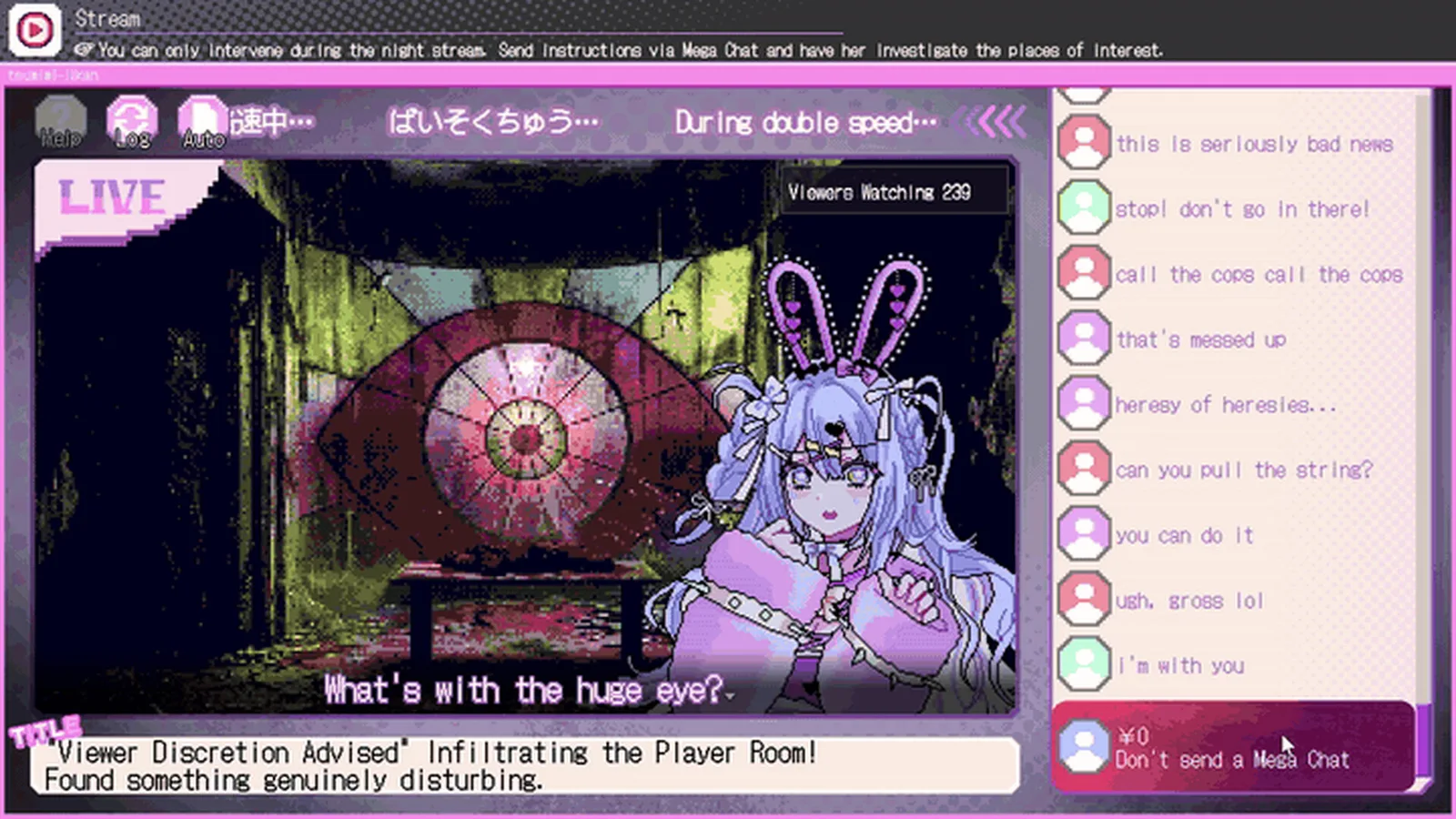
When Red Chat Ritual TSUMIMI TIME vs needy streamer overload comes up in community discussions, players immediately point to the shared DNA of desktop management, parasocial dread, and psychologically unhinged internet idols. Both titles place you behind the glowing pane of a monitor, forcing you to interact with a vulnerable young woman streaming her life away. Yet beneath that surface-level similarity, Red Chat Ritual TSUMIMI TIME reveals a stark divergence in genre execution. One is a frantic mental health and schedule-balancing simulator, while the other is a methodical point-and-click investigation game rooted in dark cult lore, urban legends, and linear multi-day deductions.
Both games put you behind a streamer's chat, but Needy Streamer Overload is about managing a person's breakdown while TSUMIMI TIME is about paying to steer an investigation.
- NSO: stat management and multiple mental states
- TSUMIMI TIME: money spent on Mega Chats that open scenes
- Different publishers, different endings logic
Doesn't apply when: You want a game with the same loop length — TSUMIMI TIME runs 15 days per attempt
Source note: Chapter deadlines, item requirements and Steam achievement percentages on this page come from the official Steam store listing for AppID 4413070 and our own playthrough on Version 1.0.1 (October 2026). Anything marked Unverified is a community report we could not reproduce in our own matches — treat it as a lead, not as a mechanic.
Examining Red Chat Ritual TSUMIMI TIME requires looking past the pixel-art anime aesthetics and investigating how the player's role alters the emotional gravity of the experience. In Needle Streamer Overload, you act as the live-in partner, boyfriend, and manager steering Ame-chan toward internet stardom or absolute ruin. Conversely, Red Chat Ritual TSUMIMI TIME positions you strictly as an outside viewer—a silent internet loser watching Tsumimi stream her descent into a forbidden mountain village to find her missing partner, Mashiro Tsukioka. This structural shift transforms the core loop from daily domestic management into an external detective puzzle where your words and donations carry terrifying consequences.
Core Gameplay Loops and Daily Structures
The structural framework of Red Chat Ritual TSUMIMI TIME highlights how different these psychological horror projects truly are. Needy Streamer Overload operates on a tight 30-day clock where every hour spent streaming, sleeping, or browsing social media alters stats like mental darkness, affection, and stress. Every action consumes time blocks within a day, turning the interface into a pressure cooker of resource optimization.
In contrast, Red Chat Ritual TSUMIMI TIME breaks its narrative across a roughly two-week day-and-night cycle divided into morning, afternoon, night, and late-night phases. Morning and afternoon are dedicated to part-time jobs, map searches, and reviewing social media threads to secure investigation keywords. Nighttime plunges you directly into Tsumimi’s live stream, where your participation relies on comments and paid Mega Chat donations.
| Gameplay Feature | Red Chat Ritual – TSUMIMI TIME | Needy Streamer Overload |
|---|---|---|
| Player Perspective | External viewer / internet fan | Partner, manager, and boyfriend |
| Time Progression | Multi-day investigation cycle | 30-day strict calendar limit |
| Primary Resource | In-game Yen (JPY) and keywords | Stress, Affection, and Darkness stats |
| Stream Interaction | Mega Chats, gifts, and donations | Direct command inputs and medication |
Narrative Themes: Cults Versus Mental Breakdown
The thematic weight behind Red Chat Ritual TSUMIMI TIME defines why players connect so deeply with their respective heroines. Needle Streamer Overload tackles modern parasocial isolation, internet addiction, bipolar symptoms, and the fragile psyche of an underground streamer craving total validation. The horror stems from internal psychological decay and the terrifying breadth of self-destruction.
Meanwhile, Red Chat Ritual TSUMIMI TIME explores external threats—specifically an abandoned village, local cult conspiracies, animal carcasses, and a stalker lurking just outside the camera's frame. Tsumimi streams from condemned ruins and burnt-out apartments not for simple clout, but because she genuinely believes her missing partner, Mashiro, was dragged into the dark history of the Matsugiri faith. The terror is physical, atmospheric, and tied to real-world trespassing rather than internal psychological collapse.
Player Agency, Choices, and Ending Structures
When evaluating player agency in Red Chat Ritual TSUMIMI TIME, the degree of control over the heroine's fate differs significantly. Needy Streamer Overload features numerous bizarre failure states tied to stat thresholds, resulting in dozens of unique internet-themed bad endings where Ame-chan meets various tragic ends.
Red Chat Ritual TSUMIMI TIME utilizes a deduction puzzle framework similar to games like Urban Myth Dissolution Center. As an external observer, your choices during live streams dictate whether you get blocked, trigger a game over, or successfully extract critical keywords.
| Ending Parameter | Red Chat Ritual – TSUMIMI TIME | Needy Streamer Overload |
|---|---|---|
| Total Endings | 9 ending achievements (6 main endings) | Dozens of distinct status endings |
| Failure Triggers | Missed investigation files, banned chat | Maxing out stress, darkness, or affection |
| Puzzle Integration | End-chapter keyword assembly | Stat management and command selection |
| Official Steam Stats | 161 user reviews, 27% positive | Overwhelmingly Positive user rating |
According to Steam data collected on 2026-10-24, Red Chat Ritual TSUMIMI TIME (published by Tohakusha Inc. with theme music by Kikuo) holds a "Mostly Negative" user score with 161 reviews and a 27% positive rating. Players frequently praise the gorgeous pixel art, voice acting, and Kikuo soundtrack while expressing frustration over rigid deduction logic, lack of mid-stream saving, and punishing chapter-end puzzle requirements.
Audio-Visual Presentation and Developer Aesthetics
Both titles rely heavily on striking visual designs that blend cute anime aesthetics with deeply unsettling horror elements. Needy Streamer Overload utilizes retro Windows aesthetics, pop-art color palettes, and frantic notification pop-ups to mirror the chaotic sensory overload of modern web culture.
Red Chat Ritual TSUMIMI TIME features character designs by wata, pixel art by Nanami Yuki, and original musical compositions by Kikuo. The contrast between Tsumimi's bright purple-blue hair and cheerful idol persona against the pitch-black corridors of the ghost village creates a potent visual dissonance. Voice acting is fully realized in Japanese, heightening the emotional impact when Tsumimi's voice quivers while exploring dark, blood-stained prayer rooms.
Investigating Clues and Item Mechanics
The investigation mechanics in Red Chat Ritual TSUMIMI TIME offer another layer of mechanical depth that sets it apart from traditional visual novels. While Needy Streamer Overload focuses on internet browsing to boost follower counts, Red Chat Ritual TSUMIMI TIME requires players to actively gather physical evidence, examine bulletin boards, and purchase supplies via an in-game wish list.
However, player reception noted on Steam highlights that many purchased items—such as portable chargers, rubber gloves, or the potato gun—frequently feel disconnected from active puzzles unless deployed precisely before specific narrative triggers. This trial-and-error design forces players to rely heavily on save-scumming across its three save slots to avoid losing progress during live stream investigations.
Which one to play first
| If you want | Start with |
|---|---|
| A deduction puzzle that decides which ending you get | Red Chat Ritual TSUMIMI TIME |
| A stream whose tone you tune with money and timing | Red Chat Ritual TSUMIMI TIME |
| A day-by-day management loop around one person's state | Needy Streamer Overload |
| A short run you can finish in an evening | Either — TSUMIMI TIME is 3 to 4 hours per attempt |
We are not neutral here and do not pretend to be: this site covers one of the two games, and the comparison above is limited to what we could check ourselves on Steam and in our own playthrough.
Frequently Asked Questions
Related
- Story hub — the story pages
- Plot — what this game does differently
- Characters — the streamer archetype, compared
Is Red Chat Ritual TSUMIMI TIME made by the same team as Needy Streamer Overload?
No. Red Chat Ritual TSUMIMI TIME comparisons arise purely from similar aesthetic choices and streaming themes. Red Chat Ritual – TSUMIMI TIME was developed by Tohakusha Inc. and released on Steam on October 22, 2026.
Does Red Chat Ritual TSUMIMI TIME have supernatural elements?
Community discussions remain divided. Some players argue that the mysterious stalker and village mysteries are entirely logical hoaxes similar to a "Scooby-Doo" plot, while others suspect deeper psychological or supernatural undertones tied to the content warnings for self-harm and suicide.
How long does it take to complete Red Chat Ritual TSUMIMI TIME?
A single playthrough takes approximately 3 to 4 hours. Seeing all content and unlocking all achievement paths requires roughly 6 to 8 hours of playtime.
What are the main platforms and language options available?
The game is available exclusively on Windows via Steam. It supports text languages in English, Simplified Chinese, Traditional Chinese, and Japanese, with full Japanese voice acting.
Which of the two games is longer?
We only publish the figure we measured ourselves: TSUMIMI TIME is a 15-day run, and a full ending sweep takes 6 to 8 hours. We do not quote a comparable number for Needy Streamer Overload because we have not timed it.
Related Guides
Decoding the Red Chat Ritual TSUMIMI TIME lore and hidden story fragments
Explore the Red Chat Ritual TSUMIMI TIME lore in this 15-day psychological horror adventure on Steam. Uncover secrets, chapters, and endings.
Red Chat Ritual TSUMIMI TIME Characters and Story Breakdown
Red Chat Ritual TSUMIMI TIME characters: Tsumimi, the 19-year-old streamer, Mashiro, the partner who vanishes, and the fan you play as each night.
Red Chat Ritual TSUMIMI TIME Yuri Themes, Story Guide, and Ending Mechanics
Explore Red Chat Ritual TSUMIMI TIME story details, investigation mechanics, 15-day survival loops, and the truth behind Mashiro's disappearance.
Uncovering the Narrative of Red Chat Ritual TSUMIMI TIME Song and Story Secrets
The Red Chat Ritual TSUMIMI TIME theme song is written by Kikuo and sung by Kagura Mea. Full credits, where to hear it, and where it plays in the story.
Understanding the Red Chat Ritual TSUMIMI TIME Plot and Mystery
Explore the Red Chat Ritual TSUMIMI TIME plot involving missing idol Mashiro, stream interventions, 15-day survival, and multiple puzzle endings.
Demo Save Won't Carry Over to the Full Game — TSUMIMI TIME
The TSUMIMI TIME demo is a separate Steam app (AppID 4793590) with its own save location, so there is no import path into the full game. Here is where each build stores its data and why copying files fails.