TSUMIMI TIME Story: Characters, Plot & Lore
Six pages on the narrative: the two leads, the cult village, the theme song credits, the yuri framing, and a comparison with Needy Streamer Overload.
The story section, in numbers
- 6
- Pages in this section
- 2
- Named leads
- 15 days
- In-game span
- 9
- Ending labels
Tsumimi and Mashiro
spoiler-free until you open them
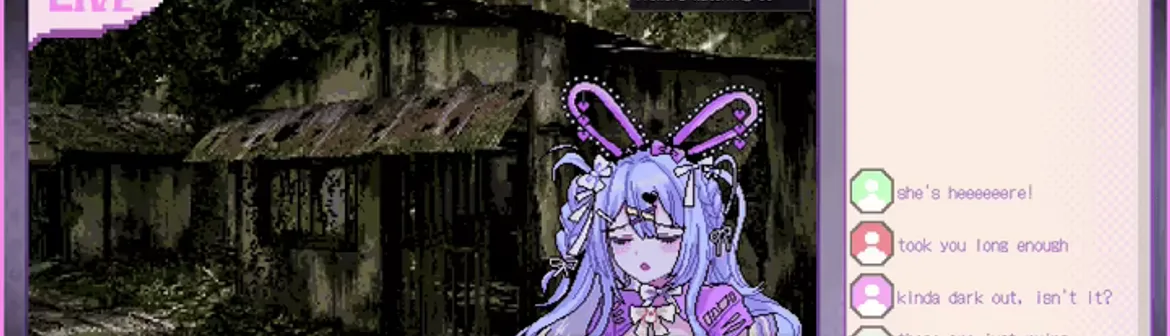
This game's story is a two-hander, and the two people in it are not symmetrical. Tsumimi is the one you watch and talk to; Mashiro is the one who is missing, and the entire investigation is an attempt to find out what happened to her. Everything else — the village, the cult, the ritual — exists to explain that absence.
The pages here are ordered by spoiler weight rather than by importance, so you can read the first two before finishing a run and save the rest for afterwards.
Source note: Character names, the premise and the game's own framing come from the official Steam store text and the developer's Hints & FAQ. Interpretations of what the ending text means are ours and are labelled as such. Anything we could not verify is marked Unverified.
Spoiler map, read this first
| Page | Spoilers | Safe to read |
|---|---|---|
| Characters | Who exists, what they want, no plot turns | Before your first run |
| Theme song | Who composed it, what the lyrics reference | Before your first run |
| Is it yuri? | The relationship framing, no endings | Before your first run |
| Plot summary | The whole arc, including the final deduction | After one ending |
| Lore and the village | The cult's rules and why the ritual exists | After one ending |
| vs Needy Streamer Overload | Structural comparison, some ending shape | After one ending |
If you have not finished a run, the first three rows are the ones to read. The rest assume you know how it ends.
Who the two leads are, without spoiling anything
Tsumimi Imase is an independent streamer in her late teens, part of a two-person unit, and the person whose broadcast you spend the game watching. She is not a passive victim: she chooses to go into the village, and she chooses to keep streaming from it. Most of what you can influence is her confidence, not her location.
Mashiro Tsukioka is the other half of that unit, and she is missing before the game starts. You never control her. The investigation exists because Tsumimi will not let the disappearance go, and the clues you collect are, almost without exception, about Mashiro's last weeks rather than about Tsumimi's present.
That structure is why the game reads as a horror story rather than a romance: the person you are closest to is investigating an absence, and the further she gets, the less certain you are that finding the answer helps her. The character pages go through the supporting cast, including the ones who only exist in documents.
The setting, and why it is a village
The ritual takes place in an abandoned mountain community with an active belief system still running underneath the decay. The game's own store text frames it as an infiltration: Tsumimi goes in as a streamer looking for content, and the content turns out to be a practice that expects participants.
What matters for reading the plot is that the village is not a haunted house. It has rules, they are old, and they are being followed by people who are still there. The lore page separates what the game states outright from what it only implies, which is a distinction the game itself is careful about.
Themes the game is actually about
Three, and they recur in every branch:
- Watching versus intervening. You are a viewer with a wallet. The game keeps asking whether paying to speak is the same as caring.
- Complicity in performance. Tsumimi's livelihood depends on an audience that wants her to be in danger. You are that audience.
- What a disappearance does to the person left behind. Mashiro is absent, but she is the engine of the plot; Tsumimi's decisions are all reactions to that absence.
None of these are resolved identically across the nine endings, which is why the endings hub is organised by outcome rather than by chapter.
How it compares to Needy Streamer Overload
The comparison is inevitable and mostly fair at the surface level: a streamer, a chat window, a downward spiral, multiple endings. It is a weaker match than it looks.
| TSUMIMI TIME | Needy Streamer Overload | |
|---|---|---|
| Your role | Viewer paying to intervene | Producer managing a streamer |
| Core verb | Investigate and deduce | Schedule and manage |
| Failure mode | Wrong deduction | Wrong management |
| Horror source | The village's practice | The protagonist's mental state |
| Ending count | 9 achievements | Different structure, different count |
The short version: Needy Streamer Overload is about managing someone; this is about investigating something. The full comparison page goes through it without turning into a review of the other game.
Readings that the game does not settle
Three interpretive questions come up repeatedly, and the honest position on each is that the text allows more than one answer.
Is the ending a rescue or a failure? The official descriptions do not editorialise. End 1 is described only as "the ending where Tsumimi was stabbed" and End 2 as "the ending where Tsumimi was not stabbed" — a factual split, not a moral one. Which of those reads as the good outcome depends on what you think the game is about, and the endings hub presents the pair without ranking them.
Whose story is it? Tsumimi is present for all fifteen days; Mashiro is present only in documents. A case can be made that the protagonist is the absent one, and the plot summary sets out the evidence for both readings rather than choosing.
Is the village supernatural? The lore page separates what the game states from what it implies, because the answer changes what genre you think you played — and the game is careful never to say outright.
Where the mechanics and the story meet
The unusual thing about this game's structure is that its narrative is gated by an investigation system, so the story you experience depends on how thoroughly you searched. A player who skims gets a different ending than a player who reads every reply thread, and neither of them "missed content" in the usual sense.
That makes the guide section part of the story section in practice. The walkthrough explains which days carry story-critical material, the beginner guide explains why reading is not the same as investigating, and the file troubleshooting page is the fix for the most common way a story thread silently closes.
For the surrounding material: the theme song page covers the composer and what the lyrics reference, the yuri page handles the relationship question without turning it into a genre argument, and the comparison page puts the game next to the title it is most often mistaken for. If you have not bought it yet, the release hub covers price and platform, and the demo hub covers what the free build actually shows.
Quick index
Pages that get opened alongside the story section, in rough order of usefulness.
- All nine endings — the arc, without naming a best one
- The loop that gates the story — why searching changes what you read
- Gift timing calculator — the deadline that closes a story thread
- Achievement rates — which branches almost nobody reaches
- Troubleshooting index — for when a scene will not trigger
- Open questions — what the text leaves genuinely undecided
- Release hub — price and platform, if you have not bought it
- Community section — how others read the same scenes
Music
The theme is a real release, not in-house library music, and the composer is credited. Players who arrive from the music side tend to be surprised by how much of the soundtrack is diegetic — the songs exist inside the fiction, as things Tsumimi performs. The theme song page covers the credits and what the lyrics point at.
If you are here for the buying decision rather than the story, the release hub answers the price and platform questions, and the guide section covers the loop without touching the plot.
Who are the main characters?
Tsumimi Imase, a teenage independent streamer you watch throughout the game, and Mashiro Tsukioka, her missing unit partner. You never control either of them directly — you control what you pay to say.
Is TSUMIMI TIME a horror game?
Yes. Steam classifies it as a psychological horror adventure, and the horror comes from the village's belief system and the investigation itself rather than from jump scares.
Is it yuri?
It is framed around a close relationship between two women, and the game does not present it as a romance route with choices. The yuri page sets out what the text supports and what it leaves open.
Do I need to know the story to use the guides?
No. The walkthrough is written to be usable without knowing any plot, and every spoiler-sensitive answer is behind a page that says so in its first paragraph.
How long is the story?
Fifteen in-game days across three chapters, with nine endings. One run is short; the branch structure is what makes the total length longer than a single playthrough suggests.
Decoding the Red Chat Ritual TSUMIMI TIME lore and hidden story fragments
Explore the Red Chat Ritual TSUMIMI TIME lore in this 15-day psychological horror adventure on Steam. Uncover secrets, chapters, and endings.
Read moreRed Chat Ritual TSUMIMI TIME Characters and Story Breakdown
Red Chat Ritual TSUMIMI TIME characters: Tsumimi, the 19-year-old streamer, Mashiro, the partner who vanishes, and the fan you play as each night.
Read moreRed Chat Ritual TSUMIMI TIME vs Needy Streamer Overload: A Narrative Comparison
Compare Red Chat Ritual TSUMIMI TIME and Needy Streamer Overload across mechanics, story loops, player agency, psychological horror themes, and Steam data.
Read moreRed Chat Ritual TSUMIMI TIME Yuri Themes, Story Guide, and Ending Mechanics
Explore Red Chat Ritual TSUMIMI TIME story details, investigation mechanics, 15-day survival loops, and the truth behind Mashiro's disappearance.
Read moreUncovering the Narrative of Red Chat Ritual TSUMIMI TIME Song and Story Secrets
The Red Chat Ritual TSUMIMI TIME theme song is written by Kikuo and sung by Kagura Mea. Full credits, where to hear it, and where it plays in the story.
Read moreUnderstanding the Red Chat Ritual TSUMIMI TIME Plot and Mystery
Explore the Red Chat Ritual TSUMIMI TIME plot involving missing idol Mashiro, stream interventions, 15-day survival, and multiple puzzle endings.
Read more